
2 min read
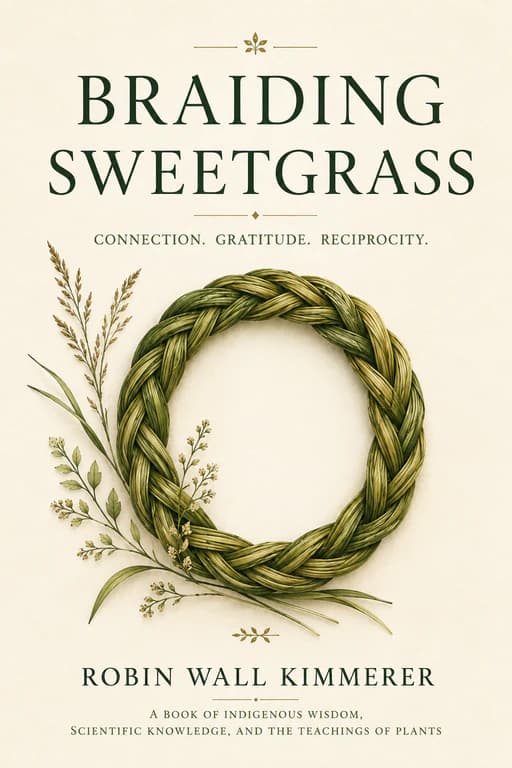
Braiding Sweetgrass
The living world is already sustaining ordinary life in ways that are easy to use without noticing.
One-Page Story
The ditch behind the row of houses had not been anyone’s concern until the water stopped moving.
It ran between back fences, under a low footbridge, and past a patch of reeds that children were told not to enter. In summer it smelled faintly of mud. In winter it disappeared beneath leaves and plastic wrappers.
After three days of rain, water spread across the shared path and gathered against the lowest gardens.
Mr. Bell from number fourteen said the council should clear it. Priya from number ten said the council had been called twice already. Someone suggested hiring a contractor. Someone else asked who was meant to pay.
On Saturday morning, six people arrived with gloves, bins, and a wheelbarrow that pulled to one side.
They found more than leaves.
A broken fence panel had slid into the channel. Roots had held a bank together until the soil above them had been piled with old cuttings. A drain opening near the bridge was blocked by a child’s football, a plastic bag, and branches pushed there by the last storm.
Nobody agreed on what counted as rubbish.
Mr. Bell wanted the reeds cut back completely. Priya said they were holding the bank. A woman from the corner house pointed out that the water had nowhere to go if they cleared only their own stretch.
They worked until lunch, stopping often to argue about where to put what they had pulled out.
By afternoon, a narrow line of water appeared beneath the football and began moving toward the bridge.
It was not enough. The lower gardens were still wet, and the council had not called back. One fence remained loose. The reeds were thinner in places than anyone liked.
As people carried tools home, Priya taped a sheet of paper to the bridge rail.
Next Saturday: bring gloves. We still need to decide about the bank.
The wind lifted one corner. She pressed it down with her palm, then left it there.
Why This Book Matters
Braiding Sweetgrass is distinctive for bringing botanical knowledge, story, ethical reflection, and Indigenous perspectives into conversation without reducing any of them to a single uniform worldview.
Its significance lies in making questions of reciprocity and responsibility harder to keep abstract. The book asks what forms of attention become possible when the living world is not treated only as material or backdrop.
Should You Read It?
Read it if...
- You are open to science, story, and ethical reflection held together rather than separated into a technical subject and a personal one.
Skip it if...
- You want a technical ecology textbook or a single universal account of Indigenous knowledge rather than a situated, essay-led conversation.
Try This Today
Follow one condition of care
Choose one ordinary place you use today. Notice one living or maintained condition that makes it possible, and one person, system, or season on which that condition depends.