
2 min read
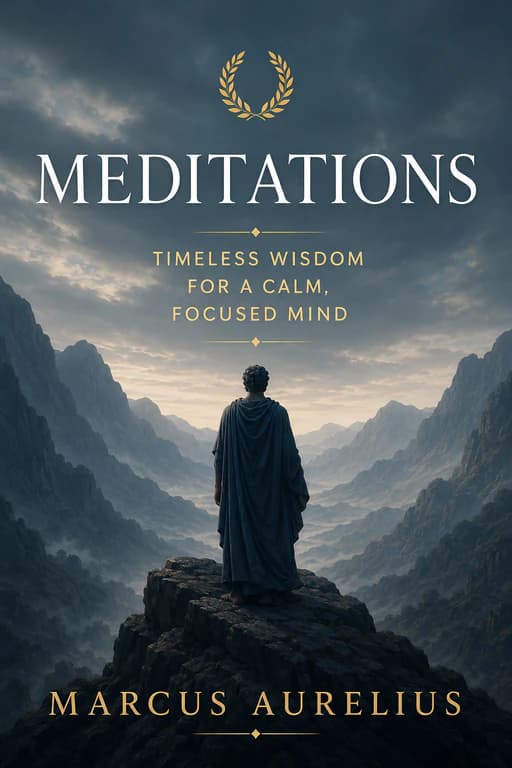
Meditations
When an outcome will not become fairer through further argument, what remains yours to do?
One-Page Story
The diversion began before Jo reached the river.
A delivery lorry had struck the low bridge, and the road behind it had become a line of buses, vans, and people standing in the rain with their collars up. Control sent Jo three unfamiliar turns and a temporary stop list that did not match the map fixed beside her seat.
At the first missed stop, a man near the front stood up.
“My mother gets on there,” he said.
“I’ve been diverted.”
“You could have said something.”
Jo glanced at the screen. The recorded announcement had failed when the route changed.
“I’m saying it now.”
The man sat down hard enough to shake the handrail.
At the next junction, a woman asked whether the bus would still pass the clinic. Jo did not know. Two passengers began giving opposite instructions from memory. Someone at the back laughed when she took the wrong lane, then had to reverse slowly while cars pressed past her mirrors.
By the time she reached the temporary terminus, there was a complaint waiting in the driver system.
Driver unhelpful. Refused to stop.
Jo read it twice before opening the doors.
She wanted to write that the passenger had shouted at her before she had been given the correct route. She wanted to write that the announcement system was broken, that the bridge was closed, that nobody at control had answered for nine minutes.
Instead, she took the route sheet from its clip and folded it into quarters.
The next bus was due in six minutes. An older man remained seated near the middle.
“Does this one go back?” he asked.
“It will,” Jo said. “Not from here. I can tell you where to change.”
He looked at the rain beyond the windows.
“I don’t know that part.”
Jo felt the complaint still sitting in the screen beside her name.
She got out of her cab, walked with him to the shelter across the road, and pointed to the number painted on the pole. When she returned, the relief driver was waiting beside the bus.
“Bad one?” he asked.
Jo handed him the folded route sheet.
“Bridge,” she said.
Then she went inside to complete the report.
Why This Book Matters
Meditations is unusual because it was not shaped as a public program of advice. It preserves a person repeatedly examining judgment, conduct, responsibility, and the demands of ordinary difficulty.
That private quality gives the work its endurance. Readers encounter philosophy as a practice of returning to a question, not as a promise that pain, injustice, or emotion can be made irrelevant.
Should You Read It?
Read it if...
- You value reflective philosophical writing that stays close to conduct, judgment, and uncertainty rather than offering a modern program.
- You are willing to read an ancient text as a record of repeated self-reminders, not a finished system.
Skip it if...
- You want a modern, structured self-help program with exercises, case studies, and a clear progression.
- You are looking for a philosophy that dismisses emotion, hardship, or injustice rather than asking how to meet them.
Try This Today
Find the next responsibility
When a situation is still occupying your mind, name one thing you cannot change and one responsibility that remains available today. Give the second your full attention without pretending the first does not matter.
Related Books
Viktor E. Frankl
Man's Search for Meaning
2 min read
Man's Search for Meaning
A grave book for readers willing to meet historical testimony without asking it to become an inspirational lesson.