
2 min read
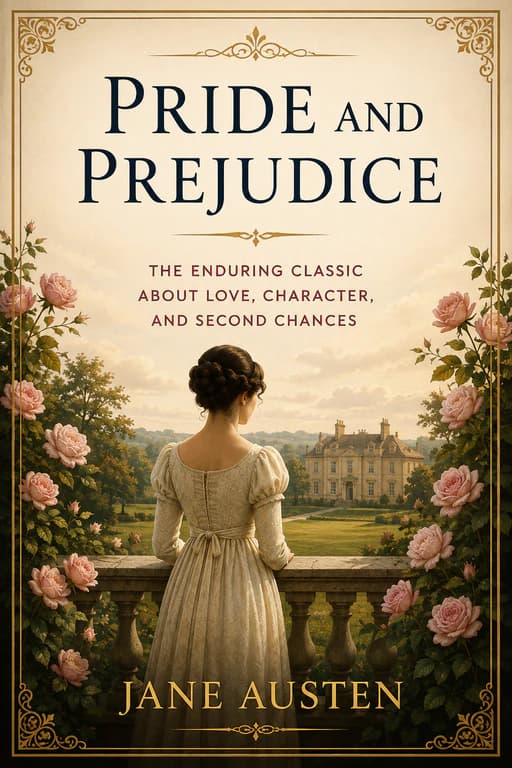
Pride and Prejudice
by Jane Austen
A sharp remark can make a social world feel legible just before it makes it harder to see.
One-Page Story
“You cannot put Uncle Ravi beside the wine,” said Tessa.
“I was not putting him beside the wine,” said Jo. “I was putting him beside the window.”
“The window is beside the wine.”
They stood in the hall with the seating chart taped to the wall. The bride had sent it in a spreadsheet, which Tessa considered evidence that she had already given up on the human side of marriage. Jo moved a paper rectangle marked RAVI one place left.
“There. He’s beside Aunt Mo.”
“Aunt Mo will ask him why he never calls.”
“Then he should call.”
By noon, every guest had become a problem with a history: the cousin who would take offence at being near the children, the colleague who always found the person she was least meant to speak to, the neighbour who had once told the groom his new coat made him look financially adventurous.
Jo liked arranging people. From a few stories and old impressions, she could produce a table that seemed to explain everyone. Tessa distrusted this skill only when it was turned against her.
“Why is Mara at table four?” Tessa asked.
“Because she knows no one at table six.”
“She knows Daniel.”
“She said Daniel bored her.”
“She said his presentation bored her. That is different.”
The doorbell rang. The bride carried two bags of ice and a worried expression. “Small change,” she said. “Mara’s bringing her sister. And Daniel is coming with his partner.”
Tessa laughed so hard she sat on the stairs. Jo looked at the chart. Table four now had too many people. Table six had two empty places. Uncle Ravi remained beside the window, which was beside the wine.
“Should I be worried?” the bride asked.
“Only if you want everyone comfortable,” Tessa said.
Jo reached for the tape. “That was never the brief.”
Why This Book Matters
Pride and Prejudice endures for Jane Austen’s precise social observation: conversation, manners, status, money, marriage, and family pressure are not background details but forces that shape what people can say, assume, and risk.
Its wit makes social knowledge feel both pleasurable and precarious. Austen follows the gap between confident perception and actual understanding without separating private feeling from the economic and familial conditions that govern a life.
Should You Read It?
Read it if...
- You enjoy dialogue, irony, social observation, family dynamics, and romantic tension shaped by manners, money, and historically situated constraints.
- You like fiction in which conversation and social encounters carry much of the action, and confident judgments remain open to revision.
Skip it if...
- You dislike older prose, social comedy, indirect emotional expression, or historical fiction whose social rules require patient attention.
- You are seeking fast modern plotting, direct confrontation, or a romance that treats its social and economic pressures as secondary.
A Question to Keep
A Question to Keep
Which account of another person becomes more convincing because it also improves the teller’s place in the room?