2 min read
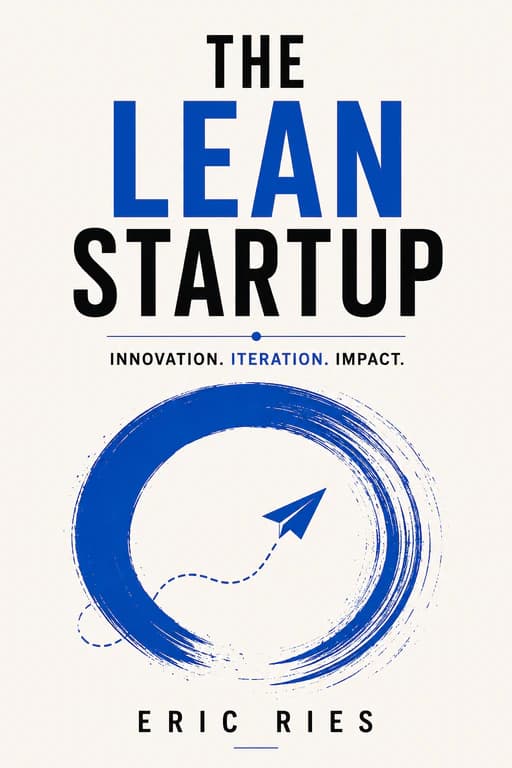
The Lean Startup
by Eric Ries
A plan can become more convincing as it becomes more detailed—even when its most important question remains unanswered.
One-Page Story
The museum’s new room had taken eight months to prepare.
It was meant to introduce visitors to the river before they reached the larger exhibition upstairs: maps on one wall, old photographs on another, a model of the floodplain under glass. The team had argued over typefaces, labels, lighting levels, and the exact shade of blue behind the maps.
The opening was still three weeks away when Leila suggested letting people in early.
“Not properly,” she said. “Just for an afternoon.”
The curator looked at the unfinished wall panels. “There’s nothing ready to show.”
“There’s enough to learn from.”
They opened the room on a Saturday with temporary signs and one staff member by the door. Families came in first, then two cyclists escaping the rain, then a group of older visitors who moved slowly around the model.
Leila stood near the maps with a clipboard.
Almost no one read the long introductory panel. Several people pressed their faces close to the floodplain model, then asked the attendant whether the water still reached the places marked in red. Two visitors compared the old photographs to a street they had walked that morning. Another asked where the museum kept accounts from people who had lived through the last flood.
By four o’clock, the team had a page of notes and no agreement about what they meant.
The curator thought the model should become the centre of the room. The designer said people had only noticed it because the maps were unfinished. Leila pointed out that several visitors had asked where they could add their own memory of the river.
“That wasn’t even an option,” the curator said.
“No,” Leila said. “It wasn’t.”
On Monday, the polished opening panel was still on the table. The model was still under glass. The team had not decided what to remove, what to build, or whether a memory wall belonged in a room about a river at all.
Leila erased the word Introduction from the schedule and wrote Second opening in its place.
Why This Book Matters
The Lean Startup gave early venture work a durable language for distinguishing activity from learning. Its central contribution is not minimalism for its own sake, but exposing the assumptions that make a plan consequential.
The book remains useful because it treats evidence as something that can change the next question, not merely confirm the confidence that produced the first plan.
Should You Read It?
Read it if...
- You are developing a venture, service, product, or program whose important assumptions have not yet met real behaviour.
- You prefer learning through small evidence-bearing tests to polishing a private plan until it feels inevitable.
Skip it if...
- You want a formula guaranteeing that a minimal first version will succeed.
- You need detailed operating guidance for a mature organization rather than a framework for early uncertainty.
Try This Today
Make one uncertainty visible
Choose a project belief that would change your next move if it proved wrong. Find the smallest safe way to let another person’s actual behaviour, rather than your prediction, bear on it.