
2 min read
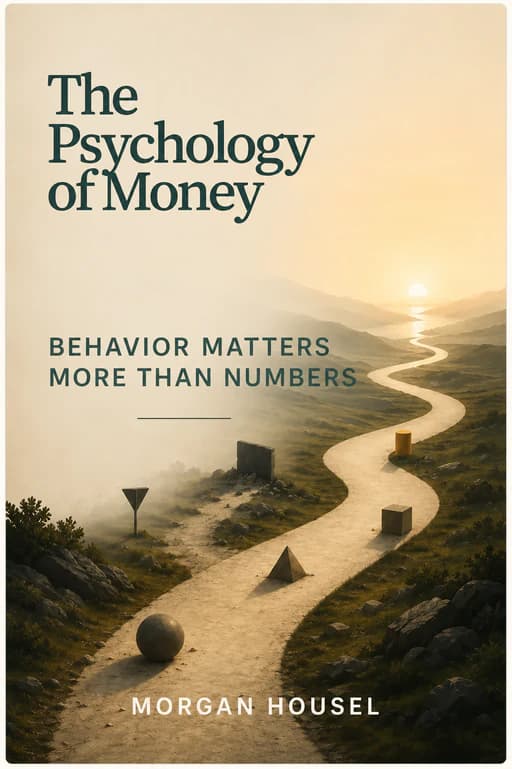
The Psychology of Money
How often do we call a money decision obvious only after the future has made it look that way?
Continue with the original
One-Page Story
At 3:12 Friday, Lena was folding shirts at the laundromat when her phone rang.
“Are you near Riverside?” said Mara, the concert manager. “Felix is stuck north of the city. The bridge is closed. I’ve called three people.”
Lena looked at the white shirts gathering steam in the basket. Her violin was beside her, where it had been since a morning lesson. “What’s on the programme?”
“Dvořák. Second violin. Seven o’clock.”
“I can get there.”
The first taxi passed her. The second stopped after she stepped into the road and raised both arms. At Riverside, the stage door was propped open with a fire extinguisher. Someone led her through a corridor of paint tins and borrowed chairs.
The quartet was already tuning. Felix’s part sat on a music stand, covered with square handwriting. Lena knew the piece, though not in the order Mara had printed. During the sound check, she crossed out two bowings, asked the cellist where he wanted the breath before the slow movement, and made the last page turn herself when the stand light failed.
The concert was not flawless. Lena came in early once after a cough from the audience. In the finale, the violist missed the first cue, and Lena held her note a fraction longer until everyone found the same place again.
Afterward, Mara pressed a paper cup of tea into her hand.
“Can you cover the Saturday matinee too?”
Felix’s train arrived after midnight. He sent Lena an apology the next morning, then a photograph of the platform sign blown sideways in the rain.
Riverside called again in October, then in January. Lena accepted some dates and declined others. She learned which manager liked a quick answer, which conductor wanted an argument before rehearsal, and how to repair a loose chin rest with a strip of gaffer tape from her case.
The following autumn, a new season poster went up in the foyer. Lena was pictured in black against the theatre’s red curtain. Beneath her name, the copy read: “A defining voice in Riverside’s return.”
Mara stood beside her, reading it over Lena’s shoulder.
“We knew you belonged here,” she said.
Lena opened the outer pocket of her case for rosin. Felix’s photocopied part was still inside, its square handwriting crowded along the margins.
Why This Book Matters
Money decisions rarely begin with perfectly rational calculation. Personal history, fear, ambition, comparison, temperament, expectation, and different experiences of risk all shape what a person can tolerate, pursue, or protect.
The Psychology of Money is distinctive because it shifts attention away from finding a mathematically optimal answer in isolation and toward the behavior required to live with uncertainty over long periods. That makes it useful for readers who want to understand not only what a decision looks like on paper, but what it asks of a person in practice.
Should You Read It?
Read it if...
- You want to understand why reasonable people with similar information can make very different choices with money.
- You prefer accessible, essay-led reflections on uncertainty, risk, patience, comparison, and long-term decision-making to technical finance instruction.
Skip it if...
- You are looking for portfolio construction, stock-picking systems, valuation techniques, detailed investing formulas, or advanced academic finance.
- You dislike essay-like, idea-driven books and would find recurring reflections on behavior and uncertainty too broad or repetitive.
Try This Today
Separate then from now.
Choose one recent decision whose outcome you now know. Make two short headings: What I knew then and What I know now.
Under the first, record only information available at the time. Under the second, record what happened later. Do not decide whether the outcome was good or bad; notice where hindsight has entered the story.
Continue exploring
What to Read After The Psychology of Money
If The Psychology of Money made money feel less like a spreadsheet and more like a field of judgement, these directions open distinct next questions.
Continue with the Original
Ready to continue with the original work? Choose the format that suits you.
OnePageBookStory may earn a commission from qualifying purchases.