
2 min read
The Undercover Economist
by Tim Harford
An ordinary transaction can look simple until you ask what each person can afford to wait for.
One-Page Story
The book was not in the bag, under the pram, or behind the back seat of the car. Marisol checked all three places while her son built a tower from the library’s wooden blocks. He had returned everything except the book he had chosen himself.
At the desk, Nora brought up the account. “It’s been overdue for six weeks. If it can’t be found, the replacement charge is twenty-eight.”
“For a children’s book?”
“It’s a hardback. And it’s part of a set.” Nora turned the monitor slightly. Three holds were listed beneath the title.
“Can I buy another copy?”
“You can. But it has to be the same edition. We use the barcode for the set.”
At the blocks, Marisol’s son knocked down his tower and began again. “He needs it for next week,” Marisol said. “I can pay some now.”
Nora said, “The fine isn’t there to punish you.”
Marisol’s face changed. “I didn’t say it was.”
Nora paused. “No. You didn’t.”
She printed a hold slip, then another form. The first listed the charge. The second offered a payment arrangement in three instalments, which Marisol had not known existed. It also said the account would remain limited until the balance was paid.
“Limited how?”
“You can borrow two books at a time instead of ten.”
Marisol looked toward her son, now turning a book about bridges from the back. “Two is enough for now,” she said.
Nora marked the account and placed the hold slip in the bag beside the blocks. On the way out, Marisol stopped at the returns slot and searched the bag once more, not because she thought the book was there, but because it was easier than leaving.
Why This Book Matters
Tim Harford makes microeconomics accessible by using ordinary transactions—queues, rents, shops, transport, and public services—to bring incentives, scarcity, bargaining power, and trade-offs into view.
The Undercover Economist does not claim that prices settle moral questions or that incentives explain every choice. Its particular value is a lucid way to ask what options, information, and constraints sit behind a decision that first appears obvious.
Should You Read It?
Read it if...
- You enjoy accessible microeconomic reasoning applied to everyday exchanges, and want to notice how incentives, scarcity, and alternatives shape ordinary life.
- You prefer lively examples and clear prose to formal models, while still wanting a serious lens on trade-offs and bargaining power.
Skip it if...
- You are seeking advanced economics, formal mathematical treatment, or a detailed account of macroeconomic policy and institutions.
- You want investing advice, personal-finance guidance, or a book built around financial tactics rather than economic reasoning about everyday transactions.
Try This Today
Follow one ordinary choice
Pause at one ordinary transaction today: a queue, delivery option, café counter, booking, or service choice. Ask: What does this option make easy? Who absorbs the inconvenience or constraint?
Do not try to calculate the right answer or turn the observation into a money exercise. Simply notice what the visible choice leaves out.
Related Books
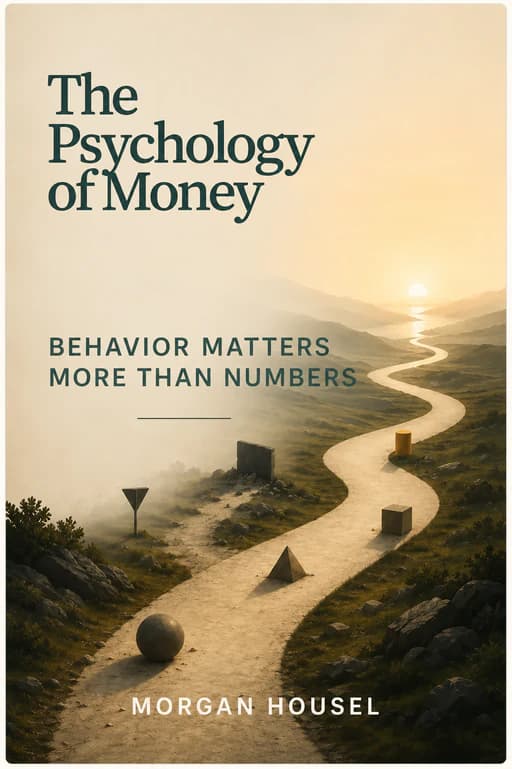
2 min read
The Psychology of Money
How often do we call a money decision obvious only after the future has made it look that way?